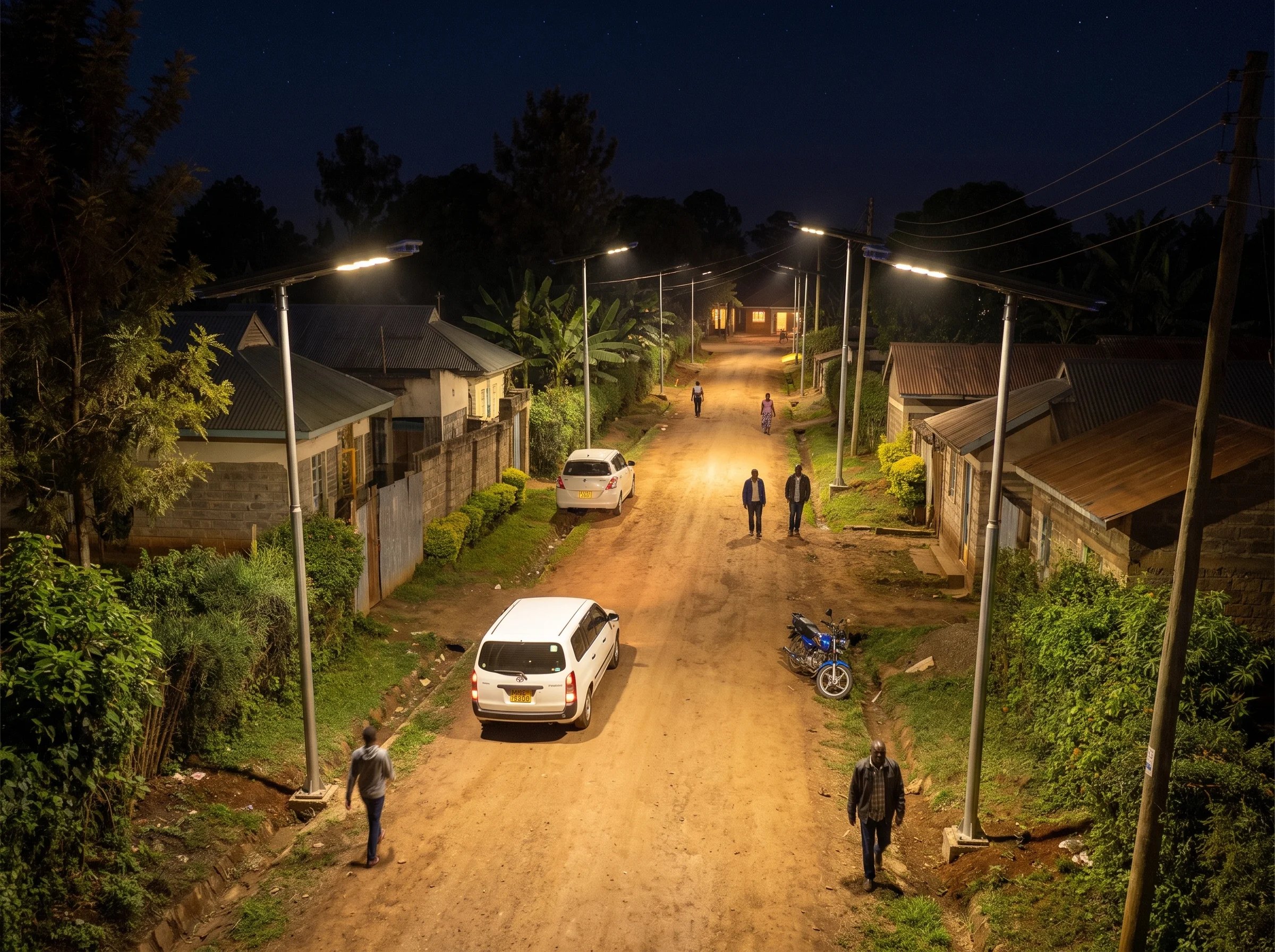
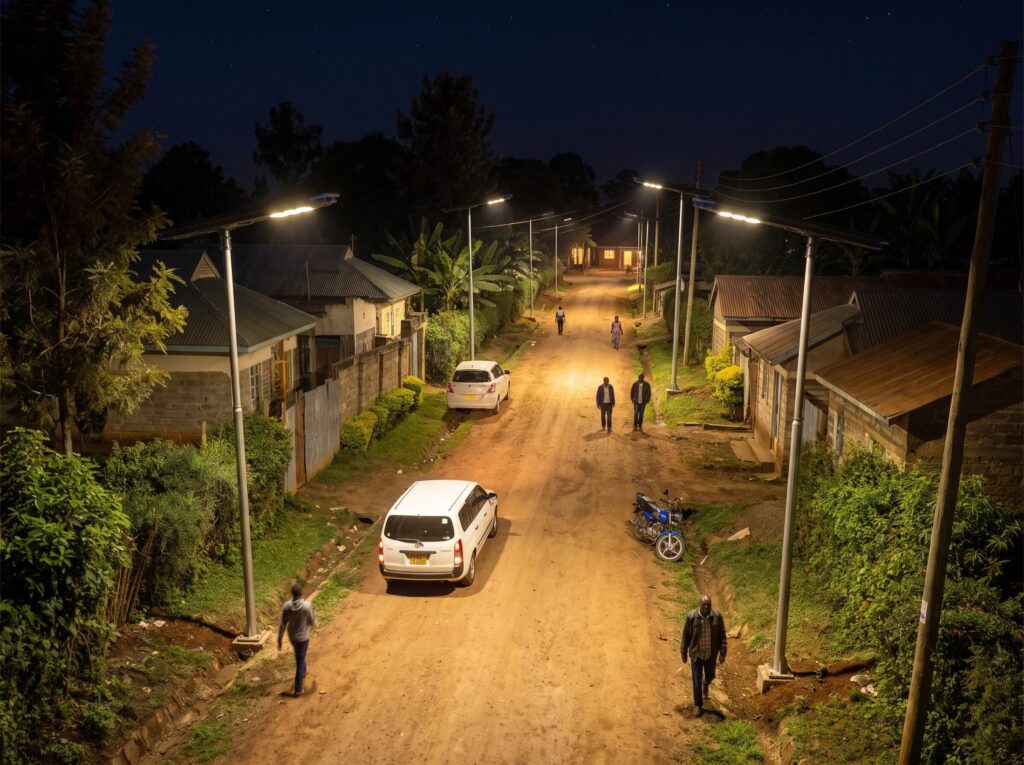
Walk down a new residential street at night and there is a good chance the lights above you are not connected to anything. No cables run between the poles, no trench was dug along the pavement, and there is no meter counting kilowatt-hours. Each light makes, stores and manages its own power. Solar street lighting has quietly become one of the most practical pieces of home and neighbourhood technology, and the way it works is a neat example of several smart systems working together in one compact unit.
This article looks inside a modern solar street light: the panel, the battery, the controller, the LED and the sensors, and explains how they cooperate to keep a street lit from dusk to dawn, night after night.
The Basic Idea: Collect by Day, Light by Night
A solar street light runs on a simple daily cycle. During the day, a solar panel turns sunlight into electricity and charges a battery. When the sun goes down, the light senses the darkness, switches on and draws power from the battery until morning. Then the cycle starts again.
That sounds easy, but making it reliable for years, in every season and in every kind of weather, takes careful engineering. The panel must collect enough energy on short winter days. The battery must store enough to cover several cloudy days in a row. And the electronics must manage every watt so the light never runs dry halfway through the night.
Component 1: The Solar Panel
The panel is the power station. Most modern street lights use monocrystalline silicon panels, which convert a higher share of sunlight into electricity than older types and perform better in limited space. The panel’s size, measured in watts, sets how much energy the light can collect each day.
Two details matter as much as size. The first is the angle. A panel tilted towards the sun at the right angle for the site’s latitude collects noticeably more energy across the year than one lying flat, especially far from the equator. The second is shade. A panel that sits in the shadow of a tree or a building for part of the day loses a large share of its output, so pole positions are chosen with the sun’s path in mind.
Component 2: The Battery
The battery is what turns daytime sunshine into night-time light. Today, most quality solar street lights use lithium iron phosphate (LiFePO4) batteries. They are safer and more stable than many other lithium chemistries, cope well with heat, and can handle thousands of charge and discharge cycles. That means a battery can last many years before it needs replacing.
Battery size is usually described in watt-hours, and the key planning figure is autonomy: how many nights the light can run without any sun at all. A system designed for two or three nights of autonomy will keep a street lit through a short spell of bad weather; regions with long rainy seasons often need more.
Component 3: The Charge Controller, the Brain of the System
Between the panel, the battery and the LED sits the controller, the small circuit board that makes all the decisions. A good controller does several jobs at once:
- Charging: it manages how energy flows from the panel into the battery. Many modern controllers use maximum power point tracking (MPPT), which continuously adjusts to pull the most energy possible from the panel as light levels change.
- Protection: it stops the battery from overcharging in strong sun and from draining too far at night, both of which shorten battery life.
- Switching: it uses the panel itself as a light sensor. When the panel’s voltage drops at dusk, the controller knows it is getting dark and turns the light on.
- Scheduling: it follows a lighting programme, such as full brightness in the evening, reduced brightness after midnight and a short boost before dawn.
That last point is where a lot of the intelligence lies. By dimming during the quiet hours, a light can save a large share of its energy without anyone noticing, which leaves more in the battery for cloudy days.
Component 4: The LED Light Source
LEDs made solar street lighting practical. They produce far more light per watt than older lamp types, switch on instantly, dim smoothly and last for tens of thousands of hours. Efficiency is often quoted in lumens per watt, and the higher the figure, the smaller the panel and battery needed for the same amount of light.
Colour also matters, especially in residential areas. Warmer white light feels more comfortable along homes and gardens, while cooler white is common on main roads. Many residents notice the difference immediately, so it is worth choosing deliberately.
Component 5: Optics, or Where the Light Goes
Two lights with the same LED and the same battery can light a street very differently. The difference is in the optics, the lenses in front of the LEDs that shape the beam. Some patterns throw a narrow strip of light along a footpath; others spread light across a full two-lane road from a pole on one side; others create a round pool for a car park or a square.
Choosing the right pattern means fewer poles, less glare into bedroom windows and less wasted light. The common system for describing these patterns is explained in this guide to street light distribution types, which shows why matching the beam to the street matters even more when every watt comes from a solar panel.
Component 6: Sensors and Smart Features
Many solar street lights now include a motion sensor. The light runs at a low, comfortable level when the street is empty and brightens when a person, bicycle or car approaches. On quiet residential streets, this can stretch the battery’s energy a long way.
Beyond motion sensing, smarter systems add remote monitoring. Each light can report its battery level, charging performance and faults, so a maintenance team knows which light needs attention before residents complain. Some systems let managers change lighting schedules from a phone or computer, which is useful for estates, campuses and town councils that look after hundreds of lights.
All-in-One or Separate Panel?
Solar street lights come in two main designs. In an all-in-one light, the panel, battery, controller and LED sit in a single compact housing at the top of the pole. It looks tidy and installs quickly, which makes it popular for residential streets and paths. In a split or all-in-two design, the panel is mounted separately so it can be larger and tilted towards the sun, which suits busier roads and places with less sunshine.
Why Build Quality Matters So Much
Because a solar street light is a complete power system on a pole, the quality of each part decides how long it lasts. A cheap battery may fade after a couple of years. A poorly sealed housing lets in dust and water. A basic controller may let the battery drain too deeply on the first run of cloudy days. These problems rarely show on day one, but they show up in the second or third winter.
That is why many councils and developers look closely at engineering and testing, not just the price per light. Brands that focus on German-engineered solar street lights, for example, put the emphasis on component selection, testing and documented performance, which is what keeps a street lit reliably over many years.
Looking After a Solar Street Light
One of the attractions of solar lighting is how little attention it needs. A simple routine keeps it performing well:
- Clean the panel once or twice a year, or more often near dusty roads or trees, because dirt reduces charging.
- Check the lights at night every few months to spot any that are dim or off.
- Plan for battery replacement at the end of its rated life rather than waiting for failures.
- Keep a simple record of each light’s location and installation date.
Frequently Asked Questions
Do solar street lights work in winter?
Yes, if they are sized for the shortest days and cloudiest weeks of the year. A well-designed system has a large enough panel and battery to cover several dull days in a row.
How long do the batteries last?
Quality LiFePO4 batteries typically last many years, depending on the climate and how deeply they are discharged each night. Smart dimming helps extend their life.
Can solar street lights be controlled remotely?
Many can. Systems with remote monitoring let managers check performance and change schedules without visiting each pole.
Final Thoughts
A solar street light is a small, self-contained energy system: a power station, a storage unit, a control computer and a light source, all on one pole. When each part is chosen well and the whole system is sized for the local climate, it delivers years of reliable light with no cables and no electricity bills. For homeowners, residents’ associations and developers, it is one of the most practical ways to bring smart, sustainable technology to the street outside the front door.