
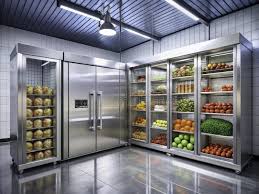
Nature has a relentless enemy — time. Every fresh product, every biological compound, every carefully crafted food item begins its inevitable journey toward deterioration the moment it leaves its source. For centuries, humanity’s answer to this challenge was simple: freeze it. Today, however, freezing is not merely a preservation technique — it is a precision science. The difference between amateur frozen storage and professional frozen storage is the difference between products that arrive in perfect condition and products that arrive compromised, recalled, or worse, dangerous. Units has built Saudi Arabia’s most advanced frozen storage infrastructure to ensure your products experience only the former — always.
Frozen Storage
Frozen storage maintains products at temperatures typically ranging from -18°C to -25°C or below — cold enough to halt microbial activity entirely and preserve the biological, chemical, and structural integrity of products for extended periods that no other storage method can match. At these temperatures, enzymatic reactions stop, bacterial growth ceases, and products enter a state of suspended preservation that can extend shelf life from days to months or even years.
But achieving and maintaining these conditions consistently, safely, and economically is a vastly more complex undertaking than simply running refrigeration equipment at a lower setting. Professional frozen storage demands an entirely different level of engineering, operational discipline, and technological investment.
The science behind Units’ frozen storage excellence:
Blast Freezing Capability Before products enter long-term frozen storage, rapid temperature reduction through blast freezing locks in quality at its peak. Units’ blast freezing technology drops product temperatures to storage levels in a fraction of the time conventional methods require — preventing the ice crystal formation that damages cellular structures and degrades product texture and quality.
Thermal Envelope Engineering The frozen storage facility itself must function as a precision thermal envelope. Units’ facilities feature industrial-grade insulation systems, vapor barrier technology, and anti-condensation structural design that maintains storage temperatures with minimal energy expenditure while completely preventing the moisture infiltration that causes frost buildup, equipment strain, and product damage.
Redundant Refrigeration Architecture A single point of failure in frozen storage can destroy inventory worth hundreds of thousands of riyals within hours. Units engineers N+1 redundant refrigeration systems into every frozen storage facility — ensuring that any single equipment failure triggers immediate automatic switchover to backup systems without any temperature excursion reaching stored products.
Cold Chain Integrity at Every Touchpoint Frozen products are vulnerable during every transfer — from receiving dock to storage, from storage to dispatch, from dispatch to delivery vehicle. Units manages every one of these touchpoints through temperature-controlled receiving docks, pre-cooled dispatch staging areas, and real-time monitoring that maintains the frozen chain without a single break.
Industries that depend on Units’ frozen storage precision:
- 🥩 Meat, poultry, and seafood importers — preserving protein products from international origins to Saudi retail and food service customers
- 🍦 Ice cream and confectionery manufacturers — maintaining product consistency and structural integrity across distribution networks
- 🥘 Ready meal and frozen food producers — supporting the explosive growth of Saudi Arabia’s convenience food sector
- 🧬 Biomedical and pharmaceutical organizations — storing plasma, biological specimens, and cryogenic medical materials at precise ultra-low temperatures
- 🌽 Frozen vegetable and fruit distributors — delivering year-round nutritional availability regardless of seasonal agricultural cycles
Explore Units’ complete frozen storage capabilities at units.sa
Frozen Storage in Dammam
Dammam is where Saudi Arabia’s industrial ambition meets its logistical infrastructure in the most concentrated form anywhere in the Kingdom. The Eastern Province capital hosts King Abdulaziz Port — one of the Gulf region’s most strategically significant cargo terminals — alongside an industrial corridor of extraordinary scale serving petrochemical, manufacturing, catering, and distribution enterprises that collectively require enormous frozen storage capacity.
Frozen Storage in Dammam serves a market profile uniquely shaped by the Eastern Province’s industrial character. Catering companies supplying frozen meal programs to offshore oil platforms and industrial campsites. Healthcare distributors managing frozen pharmaceutical and biological product inventories. International seafood importers processing container shipments arriving from Asian and European origins. Retail chains serving the Eastern Province’s substantial and diverse consumer population.
Units has engineered its Dammam frozen storage operations as a direct response to this complex, high-demand environment:
- 🚢 Direct port-to-freezer cold chain pipelines — Units’ Dammam facilities are positioned to receive temperature-sensitive cargo directly from King Abdulaziz Port with the minimum possible transit exposure
- 🏭 Industrial-volume capacity — large-scale frozen storage bays designed to accommodate the high-volume import and holding requirements of Dammam’s catering and distribution enterprises
- 🔬 Ultra-low temperature zones — dedicated storage areas operating below -40°C for biomedical, pharmaceutical, and specialized industrial applications requiring cryogenic-adjacent temperature management
- 🚛 Integrated frozen transport coordination — connecting Dammam frozen storage directly with refrigerated delivery fleets serving Al Khobar, Jubail, Dhahran, and the wider Eastern Province distribution network
- 📊 HACCP-certified operational procedures — internationally recognized food safety management systems governing every aspect of frozen product handling within Dammam facilities
- ⚡ Industrial-grade power backup infrastructure — generator systems sized to maintain full frozen storage operation through extended power interruption events common in industrial environments
- 🤝 Dedicated Eastern Province logistics expertise — account teams with deep, specific knowledge of Dammam’s supply chain ecosystem providing genuinely informed guidance to every client
Frozen Storage in Jeddah
Where Dammam serves the industrial east, Jeddah serves the commercial heart of Saudi Arabia’s western region. As the Kingdom’s most significant port city on the Red Sea coast and a major population and commercial hub, Jeddah’s frozen storage requirements are shaped by a dynamic combination of high-volume retail consumption, a thriving hospitality and food service sector, and the continuous flow of frozen product imports through Jeddah Islamic Port.
Frozen Storage in Jeddah must simultaneously serve the precision demands of pharmaceutical cold chains, the high-velocity throughput requirements of supermarket and hypermarket distribution, and the specialized needs of Jeddah’s world-class hospitality sector — all within a coastal climate that presents unique challenges for frozen facility management.
Units addresses every dimension of this complex market with purpose-built solutions:
- 🌊 Coastal climate-optimized facility design — enhanced vapor barrier systems and advanced insulation technology engineered specifically to counter the infiltration risks associated with Jeddah’s high ambient humidity levels
- 🛒 Retail distribution specialization — high-throughput frozen storage and order fulfillment operations serving Jeddah’s major supermarket chains, hypermarkets, and wholesale food distributors with the speed and accuracy that retail replenishment demands
- 🏨 Hospitality and food service expertise — tailored frozen storage and flexible dispatch scheduling supporting Jeddah’s premium hotel properties, restaurant chains, and large-scale catering operations
- 📋 SFDA compliance management — comprehensive documentation, temperature audit trails, and inspection-ready record-keeping that satisfies Saudi Food and Drug Authority requirements for all frozen food and pharmaceutical product categories
- 🌍 International import handling specialization — experienced protocols for receiving, inspecting, and transitioning frozen cargo arriving from international origins through Jeddah Islamic Port into compliant, verified storage conditions
- 📱 Real-time client monitoring dashboards — digital platforms giving Jeddah clients 24/7 remote visibility into their stored inventory conditions, stock levels, and movement history from any connected device
- 📈 Seasonal peak capacity management — flexible storage allocation frameworks that scale to accommodate the significant frozen inventory volume increases Jeddah experiences during Ramadan, Hajj season, and major retail promotional periods
Why Units Leads Saudi Arabia’s Frozen Storage Market
Units does not simply provide cold rooms — they deliver frozen storage ecosystems that function as genuine operational extensions of their clients’ supply chains. This distinction — between a passive landlord of cold space and an active cold chain partner — is what has made Units the most respected frozen storage brand in Saudi Arabia.
Their market leadership is sustained by:
- ✅ Technologically superior facilities featuring blast freezing, redundant refrigeration, and IoT monitoring across every Saudi location
- ✅ End-to-end cold chain management from port receipt through storage, order fulfillment, and temperature-controlled dispatch
- ✅ Full regulatory compliance across SFDA, HACCP, GDP, and all applicable Saudi frozen storage standards
- ✅ Proven cross-industry expertise spanning food, pharmaceutical, hospitality, retail, and industrial sectors
- ✅ A client partnership culture that invests in understanding each business’s unique supply chain requirements and delivers solutions built around those specific needs
Conclusion
Frozen storage is where product quality either survives its journey or silently perishes during it. The margin for error is measured not in percentage points but in fractions of degrees — and the consequences of getting it wrong are measured in financial losses, regulatory penalties, and damaged reputations. Whether your business demands precision Frozen Storage infrastructure, a strategically positioned operation in Dammam serving the Eastern Province’s industrial and port logistics ecosystem, or specialized Frozen Storage in Jeddah navigating the demands of retail, hospitality, and coastal cold chain complexity, Units delivers the engineering precision, operational reliability, and regulatory compliance your most valuable products deserve. Trust the leader. Visit units.sa today.
Frequently Asked Questions (FAQs)
Q1. What temperature ranges does Units maintain across its frozen storage facilities in Saudi Arabia? Units’ frozen storage facilities maintain standard frozen storage temperatures between -18°C and -25°C for conventional food and pharmaceutical products, with dedicated ultra-low temperature zones available in Dammam operating below -40°C for biomedical, cryogenic pharmaceutical, and specialized industrial applications. All temperature zones are maintained through redundant refrigeration systems monitored continuously by IoT sensor networks, with automated alerting ensuring any deviation triggers immediate operational response before stored products are affected.
Q2. How does Units manage the frozen storage challenges specific to Jeddah’s coastal climate? Jeddah’s high ambient humidity creates significant challenges for frozen storage facilities — warm, moisture-laden air attempting to infiltrate cold storage envelopes causes frost buildup, insulation degradation, and equipment strain over time. Units addresses this through enhanced vapor barrier construction in Jeddah facilities, advanced dehumidification systems integrated into facility airflow management, anti-condensation structural design at all entry and transition points, and rigorous maintenance protocols that detect and address any insulation or barrier compromises before they affect storage performance.
Q3. Does Units provide blast freezing services alongside long-term frozen storage in Dammam and Jeddah? Yes, Units offers blast freezing capability that rapidly reduces product temperatures to storage levels before transitioning items into long-term frozen holding. This service is particularly valuable for fresh protein products — meat, poultry, and seafood — arriving at Dammam or Jeddah ports that require immediate temperature reduction to preserve peak quality and comply with food safety regulations. Blast freezing prevents the large ice crystal formation that damages cellular structures, ensuring products maintain their texture, appearance, and nutritional integrity throughout their storage and distribution lifecycle.
Q4. Can Units accommodate the frozen storage and distribution requirements of businesses serving Dammam’s offshore and industrial sectors? Yes, Units has developed specialized expertise in serving the Eastern Province’s distinctive industrial cold chain requirements. Their Dammam operations support catering companies supplying frozen meal programs to offshore oil platforms and industrial campsites, with storage protocols, dispatch scheduling, and transport coordination specifically designed for the logistical demands of serving remote industrial locations. Their HACCP-certified procedures and industrial-grade power backup infrastructure ensure the uninterrupted frozen storage performance that mission-critical industrial catering operations require.
Q5. What is the process for a new business to establish frozen storage operations with Units in Saudi Arabia? New clients begin by visiting units.sa to initiate contact with Units’ business development team. An initial consultation establishes the scope of requirements — product categories, temperature specifications, volume parameters, regulatory compliance needs, and distribution geography. Units then develops a customized frozen storage proposal covering facility allocation, operational procedures, compliance documentation, and commercial terms. Once agreed, an onboarding process manages the practical transition of products into Units’ frozen storage operations with full cold chain continuity maintained throughout — ensuring no temperature excursion occurs during the changeover from previous storage arrangements.