
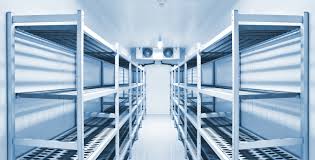
The cosmetics industry is built on trust and sensory experience. Customers expect products that look perfect, smell fresh, feel luxurious, and perform exactly as promised. One compromised batch of moisturizer, serum, foundation, or lipstick can damage a brand’s reputation built over years. Professional Storage for Cosmetics Products is not a luxury—it is a business necessity that directly impacts product integrity, customer satisfaction, and regulatory compliance. Cosmetics contain sophisticated formulations with delicate ingredients that degrade rapidly under poor storage conditions. Natural oils and butters turn rancid when exposed to heat or light. Emulsions separate into watery and oily layers when temperatures fluctuate. Active ingredients like vitamin C, retinol, and hyaluronic acid lose potency when not stored correctly. Preservatives become ineffective in high-humidity environments, allowing bacterial and fungal growth. Fragrances oxidize and change character, turning pleasant scents into unpleasant odors. Packaging materials degrade—cardboard boxes warp, plastic containers become brittle, labels peel, and seals leak.
The science of cosmetics preservation is precise and unforgiving. Most cosmetics perform best when stored between 15°C and 25°C (59°F to 77°F), the typical room temperature range where formulations remain stable. Temperatures above 30°C (86°F) accelerate chemical reactions that degrade active ingredients and cause emulsions to separate. Temperatures below 10°C (50°F) can cause some products to thicken, crystallize, or separate. Humidity levels above 60% promote mold and bacterial growth, especially in water-based products like foundations, lotions, and serums. Humidity levels below 30% can dry out cream-based products, causing shrinkage, cracking, and texture changes. Direct light, especially UV radiation, breaks down many cosmetic ingredients, causing color fading, fragrance changes, and reduced efficacy. Dust and airborne contaminants can introduce bacteria into products, especially those in jars or with dropper applicators.
Professional cosmetics storage requires precise environmental control across all these parameters. Facilities must maintain stable temperatures within the optimal range, with redundant monitoring and alarms for any deviation. Humidity must be controlled between 40% and 55%, balancing preservation of both product and packaging. Lighting should be indirect or shielded, protecting products from UV damage while allowing visibility for inventory management. Storage areas must be clean, dust-free, and protected from airborne contaminants. Shelving must be smooth and clean, preventing damage to packaging. Inventory rotation must follow first-in-first-out (FIFO) principles, ensuring older stock ships before newer stock. Security must prevent unauthorized access that could lead to theft, tampering, or contamination.
For cosmetics brands, distributors, retailers, and e-commerce sellers across Saudi Arabia, finding professional cosmetics storage has historically been challenging. Standard warehouses lack precise climate control. Self-storage facilities rarely offer the specialized conditions cosmetics require. Basement or garage storage is completely unsuitable. Units has developed specialized storage solutions specifically for cosmetics products, with facilities designed to maintain the precise conditions that preserve product quality. Their units feature temperature control between 15°C and 25°C, humidity control between 40% and 55%, indirect lighting, sealed environments to keep dust and contaminants out, and 24/7 monitoring with alerts for any deviation. Visit units.sa to discover how Units protects cosmetics products at every stage of the supply chain.
The cosmetics market in Saudi Arabia has grown dramatically in recent years. The Kingdom’s young, affluent population demands international and local beauty brands. E-commerce has expanded access to cosmetics for customers outside major cities. Social media influencers drive trends that create sudden demand spikes for specific products. This growth creates storage challenges that professional facilities address. Importers receiving container loads of cosmetics at Jeddah Islamic Port or Riyadh Dry Port need immediate climate-controlled storage to prevent heat damage during clearance and distribution. Distributors serving retailers across the Kingdom need regional storage hubs maintained at consistent conditions. E-commerce sellers need accessible storage that allows rapid order fulfillment while protecting product quality. Retailers need backup inventory for best-selling products, stored in conditions that match their back-room standards. For all these needs, Units provides the specialized environment cosmetics demand.
The financial case for professional cosmetics storage is straightforward. A single compromised batch of high-end skincare products might represent 50,000-200,000 SAR in lost inventory, plus lost customer trust, returns processing costs, and potential regulatory penalties. A month of professional storage costing 1,000-5,000 SAR is a trivial expense compared to the value of inventory protected. For brands selling products with premium pricing, the cost of quality storage is easily justified by the assurance that every unit reaching a customer will perform as intended. For distributors and retailers, professional storage reduces shrinkage from spoilage, extends shelf life, and maintains product value. For e-commerce sellers, it ensures that products shipped from storage to customers arrive in perfect condition, generating positive reviews and repeat purchases. Units helps cosmetics businesses achieve these outcomes with affordable, specialized storage units available across Saudi Arabia.
Storage for Spare Parts: Keeping Industries Moving
Industrial downtime costs money—often enormous amounts of money. Every minute that a manufacturing line waits for a replacement part translates directly to lost production, missed deliveries, and reduced revenue. A construction project delayed by missing equipment components faces penalty clauses that erode profit margins. A fleet of vehicles stuck in workshops due to unavailable spare parts loses daily revenue while mechanics wait for parts. A hospital unable to repair medical equipment due to missing components risks patient care delays. This is why professional Storage for Spare Parts is not a cost center—it is an essential operational investment that keeps businesses running, projects on schedule, and customers satisfied. Spare parts storage presents unique challenges that general storage solutions cannot address. Metal components corrode in humid environments, with rust forming on critical surfaces that can prevent proper fit or function. Rubber seals, gaskets, hoses, and belts harden and crack under temperature swings, becoming brittle and failing when installed. Electronic components degrade in static-prone or temperature-variable environments, developing latent failures that appear only after installation. Small parts like screws, clips, washers, and pins get lost in disorganized storage bins, requiring time-consuming searches or reordering. Heavy parts like engines, transmissions, and axles require reinforced flooring and lifting equipment access. Fast-moving parts need to be stored in easily accessible locations, while slow-moving parts can be stored in less convenient areas. Inventory systems must track hundreds or thousands of SKUs, with accurate counts to prevent stockouts or overstocking.
Professional spare parts storage addresses every vulnerability with specialized infrastructure and systems. Climate control maintains temperatures between 15°C and 25°C (59°F to 77°F) and humidity below 50%, preventing corrosion on metal parts and hardening on rubber components. Organized shelving systems with bin dividers, drawer units, and labeled locations ensure small parts remain visible and accessible. Heavy-duty racking supports large components, with ground-level access for forklifts and pallet jacks. Inventory management software tracks quantities, locations, reorder points, and usage history. Security systems protect valuable parts from theft, with 24/7 CCTV, access controls, and individual unit alarms. Flexible unit sizes allow spare parts operations to scale storage up or down as inventory levels change with seasonal demand, new equipment purchases, or phase-outs of old equipment.
The applications for professional spare parts storage span nearly every industry in Saudi Arabia. Industrial manufacturing requires storage for machine components, conveyor parts, motors, pumps, valves, bearings, belts, and filters. Oil and gas operations need storage for drilling equipment parts, pipeline components, pump seals, compressor parts, and instrumentation. Construction companies store heavy equipment parts, hydraulic components, tires, filters, and wear parts. Automotive workshops maintain inventory of brake pads, oil filters, belts, hoses, sensors, and electronic modules. Fleet operators store tires, batteries, lights, mirrors, and maintenance supplies. Hospitals maintain medical equipment parts, from surgical tool components to imaging system parts to bed and cart wheels. For every industry, the principle is the same: the right part in the right place at the right time means reduced downtime and increased profitability.
Units has developed specialized spare parts storage solutions that serve the diverse needs of industrial, automotive, construction, and healthcare customers across Saudi Arabia. Their facilities feature climate-controlled environments that protect metal and rubber components from degradation. Shelving systems can be customized to customer specifications, from bin storage for small parts to pallet racking for large components. Ground-level units with wide door openings accommodate heavy parts and forklift access. 24/7 access allows maintenance teams to retrieve parts during overnight or weekend repairs. Online inventory management tools at units.sa allow customers to track quantities, set reorder alerts, and manage multiple locations from a single dashboard. For spare parts managers tired of lost inventory, degraded components, and emergency orders at premium prices, Units provides the professional storage solution that keeps operations running.
The financial impact of poor spare parts storage is substantial. Consider a manufacturing plant that loses one hour of production per month due to waiting for replacement parts that were damaged in storage or could not be located. If that plant produces 50,000 SAR of product per hour, the annual cost of that single hour per month is 600,000 SAR—far exceeding the cost of professional storage. Consider a construction company that pays premium overnight shipping fees for emergency parts because their inventory was damaged by humidity. Those fees quickly accumulate into tens of thousands of SAR annually. Consider a fleet operator who grounds a delivery vehicle for three days waiting for a part that was in stock but unlocatable. The lost revenue from that single vehicle might exceed the monthly cost of organized storage. For businesses that rely on equipment uptime, professional spare parts storage is not an expense—it is an investment that pays for itself many times over through reduced downtime, lower emergency costs, and extended part life.
Why Units is the Top Company for Cosmetics and Spare Parts Storage
Across cosmetics and spare parts storage, Units has earned its reputation as the top company in Saudi Arabia. This position was earned through specialized infrastructure, industry-specific expertise, flexible terms, comprehensive security, and nationwide presence. Several factors explain why cosmetics brands and industrial operations trust Units with their valuable inventory.
First, specialized environments. Units does not offer generic storage and hope customers adapt. For cosmetics, Units provides temperature-controlled, humidity-controlled, light-protected, dust-free environments that preserve product quality from receipt to shipment. For spare parts, Units provides climate-controlled, organized, accessible environments with heavy-duty shelving and ground-level access for large components. Each environment is designed specifically for the products it houses, with infrastructure that meets or exceeds industry standards.
Second, monitoring and alerts. All Units storage units feature continuous monitoring of temperature, humidity, and access activity. For cosmetics customers, alerts trigger if conditions deviate from optimal ranges, allowing immediate correction before products are affected. For spare parts customers, alerts provide visibility into environmental conditions that could cause corrosion or hardening. Monitoring logs are retained for quality audits and regulatory compliance.
Third, flexible terms. Units understands that storage needs change with business cycles. A cosmetics brand might need more space before a product launch and less space after seasonal promotions. A spare parts operation might need overflow storage while awaiting new racking or might need to phase out obsolete parts. Units supports these changing needs with month-to-month rental agreements, no security deposits, and prorated refunds when customers vacate early. Customers can upgrade, downgrade, or cancel with minimal notice, paying only for what they actually use.
Fourth, security and access control. Both cosmetics and spare parts storage involve valuable inventory that requires protection from theft, tampering, and unauthorized access. Units provides 24/7 CCTV surveillance, biometric access controls, individual unit alarms, and on-site security personnel. For cosmetics customers storing luxury brands, enhanced security options are available. For spare parts customers storing high-value components, individual access logs provide accountability and audit trails.
Fifth, nationwide presence. Units serves customers across Saudi Arabia, with facilities in Riyadh, Jeddah, Dammam, and other major cities. A cosmetics distributor with customers nationwide can store inventory in multiple Units locations, reducing shipping distances and delivery times. A spare parts operation supporting equipment across the Kingdom can maintain regional inventory hubs, ensuring rapid response to breakdowns anywhere. The online platform at units.sa provides centralized management across all locations, with real-time inventory visibility and consolidated billing.
Conclusion
Specialized products demand specialized storage. Cosmetics products require temperature control, humidity control, light protection, and dust-free environments to maintain quality and efficacy. Spare parts require climate control, organized systems, heavy-duty infrastructure, and accessible layouts to keep industries running. Units delivers both, with purpose-built facilities, industry-specific expertise, flexible terms, comprehensive security, and nationwide reach. Whether you are protecting luxury skincare or essential machinery components, Units provides the professional storage your business deserves. Visit units.sa today to explore available units and secure your storage with complete confidence.
FAQs
Q1: What temperature and humidity do you maintain for cosmetics storage?
Units maintains cosmetics storage at temperatures between 15°C and 25°C (59°F to 77°F) and humidity between 40% and 55%, the optimal range for preserving most cosmetic formulations and preventing degradation.
Q2: Can I store heavy spare parts like engines or transmissions at Units?
Yes, Units offers ground-level units with reinforced flooring, wide door openings, and forklift access at select locations. Contact units.sa to confirm availability and discuss your specific requirements.
Q3: How do you prevent corrosion on metal spare parts?
Units maintains humidity below 50% in all spare parts storage units, preventing the moisture accumulation that causes rust and corrosion. Climate control systems and sealed building envelopes maintain consistent conditions year-round.
Q4: Can I access my cosmetics storage unit after hours for urgent orders?
Yes, Units provides 24/7 access to all storage units, including cosmetics storage. You can retrieve inventory at any time for urgent customer orders, last-minute shipments, or any other business need.
Q5: Does Units offer inventory management software for spare parts tracking?
Yes, Units provides optional inventory management tools through their online portal at units.sa. Customers can track quantities, set reorder alerts, manage bin locations, and access usage history across multiple storage units and locations.