Mold is one of the most common and misunderstood problems facing residential and commercial properties in Riverside, California. While the Inland Empire’s dry climate might suggest Mold is less of a concern than in more humid regions, the reality is quite different. Any source of moisture from a slow pipe leak to flooding or even a poorly ventilated bathroom can trigger Mold growth within as little as 24 to 48 hours. Understanding what Mold Remediation Service Riverside actually involves is the first step in protecting a property and the health of those who occupy it.
What Is Mold Remediation?
Mold remediation is the professional process of identifying, containing, removing, and preventing the return of Mold within a building. It is different from simple Mold cleaning, which addresses only surface-level growth. True remediation goes to the source locating hidden moisture, addressing underlying water damage, and restoring affected materials to a safe condition.
The goal of remediation is not necessarily to achieve a mould-free environment, since Mold spores exist naturally in outdoor air and are present in virtually every indoor space. The objective is to bring indoor Mold levels back to normal, healthy concentrations and eliminate the conditions that allowed growth to occur.
Why Mold Is a Serious Concern in Riverside
Riverside experiences hot, dry summers but also periods of elevated humidity, particularly in the aftermath of rainfall or when properties experience plumbing failures. Because homes and commercial buildings in the area are not always designed with heavy moisture management in mind, water intrusion events can quickly lead to hidden Mold growth behind walls, under flooring, in attic spaces, and inside HVAC systems.
Mold is not always visible. It can thrive inside wall cavities, beneath carpet, and within insulation for extended periods before any outward signs appear. By the time discolouration or musty odours become noticeable, the growth may already be widespread.
The Health Effects of Mold Exposure
Mold produces allergens and, in some species, potentially toxic compounds known as mycotoxins. For many people, Mold exposure triggers allergic reactions including sneezing, runny nose, itchy or watery eyes, and skin irritation. Those with asthma may experience more frequent or severe attacks in mould-affected environments. Individuals with weakened immune systems face a heightened risk of more serious respiratory infections.
Symptoms of Mold exposure can sometimes be subtle persistent fatigue, headaches, or a recurring cough and are often mistakenly attributed to other causes. If occupants of a building notice that their symptoms improve when they leave and return when they come back, Mold may be a contributing factor.
The Mold Remediation Process: Step by Step
1. Inspection and Testing
Professional remediation begins with a thorough inspection of the property. Technicians look for visible mould, check areas prone to moisture accumulation, and use advanced tools such as thermal imaging cameras and moisture metres to locate hidden water sources and Mold growth within walls and structural materials.
Air sampling and surface testing may be conducted to identify the species of Mold present and measure spore concentrations. This information helps determine the scope of remediation required and provides documentation useful for insurance claims or real estate transactions.
2. Containment
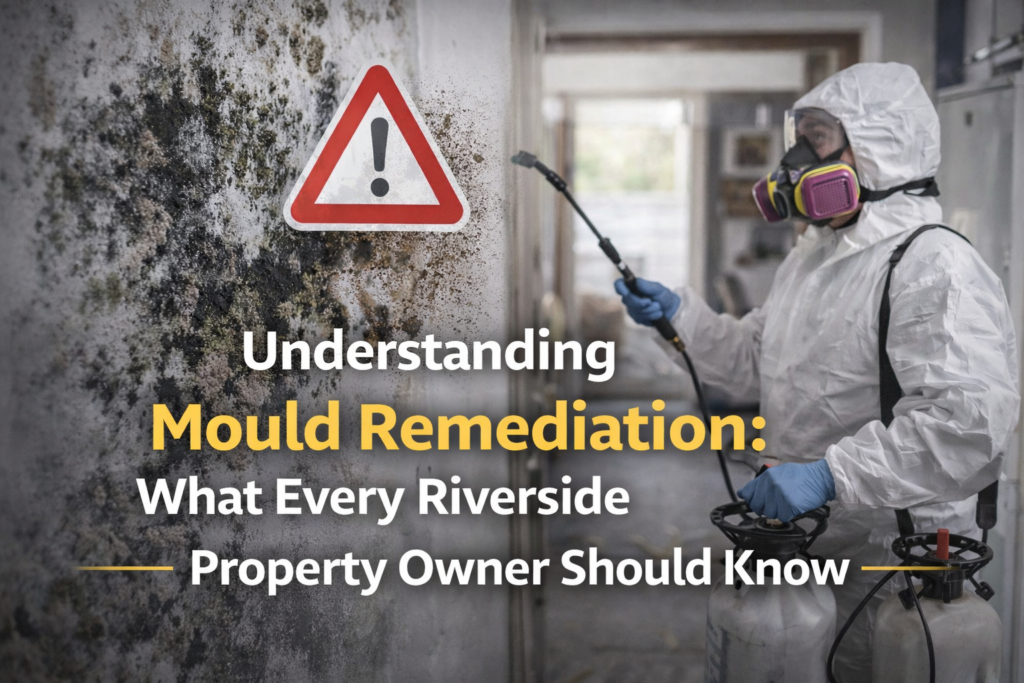
Before any removal work begins, the affected area is carefully contained to prevent Mold spores from spreading to unaffected parts of the building. Physical barriers typically polyethylene sheeting are installed to seal off the work area. HVAC systems and fans are shut down to avoid circulating airborne spores throughout the property.
Negative air pressure is often established within the containment zone using specialised equipment, ensuring that air flows into the work area rather than out of it. This technique, used by professional remediation teams, is a critical safety measure.
3. Air Filtration
High-efficiency particulate air (HEPA) vacuums and air scrubbers are used to capture and filter Mold spores from the air within the work area. These industrial-grade machines are far more effective than standard vacuum cleaners or air purifiers at removing microscopic particles.
4. Mold Removal and Material Treatment
Non-porous surfaces such as glass, metal, and hard plastic can typically be cleaned and treated with antimicrobial solutions. Porous materials such as drywall, insulation, and some types of flooring that have been significantly affected by Mold are generally removed and safely disposed of, as Mold can penetrate deep into these materials and cannot be fully eliminated through surface cleaning alone.
Structural elements such as timber framing may be treated using wire brushing, sanding, or antimicrobial coating to address surface Mold and prevent recurrence.
5. Moisture Source Resolution
Removing Mold without addressing the underlying moisture problem guarantees its return. Professional remediation always includes identification and correction of the water source whether it is a leaking pipe, roof intrusion, inadequate ventilation, or HVAC condensation. Without this step, remediation is only a temporary fix.
6. Post-Remediation Verification
After the work is complete, a follow-up inspection and testing process confirms that Mold levels have returned to normal and that the remediation was successful. A clearance test conducted by an independent party provides an unbiased verification of results and gives property owners peace of mind.
When Should You Call a Professional?
Small patches of Mold on non-porous surfaces such as tile grout in a bathroom can sometimes be addressed with appropriate cleaning products and improved ventilation. However, professional remediation is strongly recommended when Mold covers an area larger than approximately ten square feet, when it is suspected within walls or HVAC systems, when there is a known history of water damage in the property, or when any occupant is experiencing health symptoms that may be related to Mold exposure.
Mold and Real Estate in Riverside
Mold disclosure is a significant issue in California real estate transactions. Sellers are legally obligated to disclose known Mold problems to prospective buyers. For homeowners considering selling a property, having a documented professional remediation on record including pre- and post-remediation test results provides transparency and confidence to buyers.
Understanding Mold remediation takes the mystery out of a process that can seem daunting. With the right professional approach, even significant Mold problems can be resolved effectively, restoring a property to a safe and healthy condition.